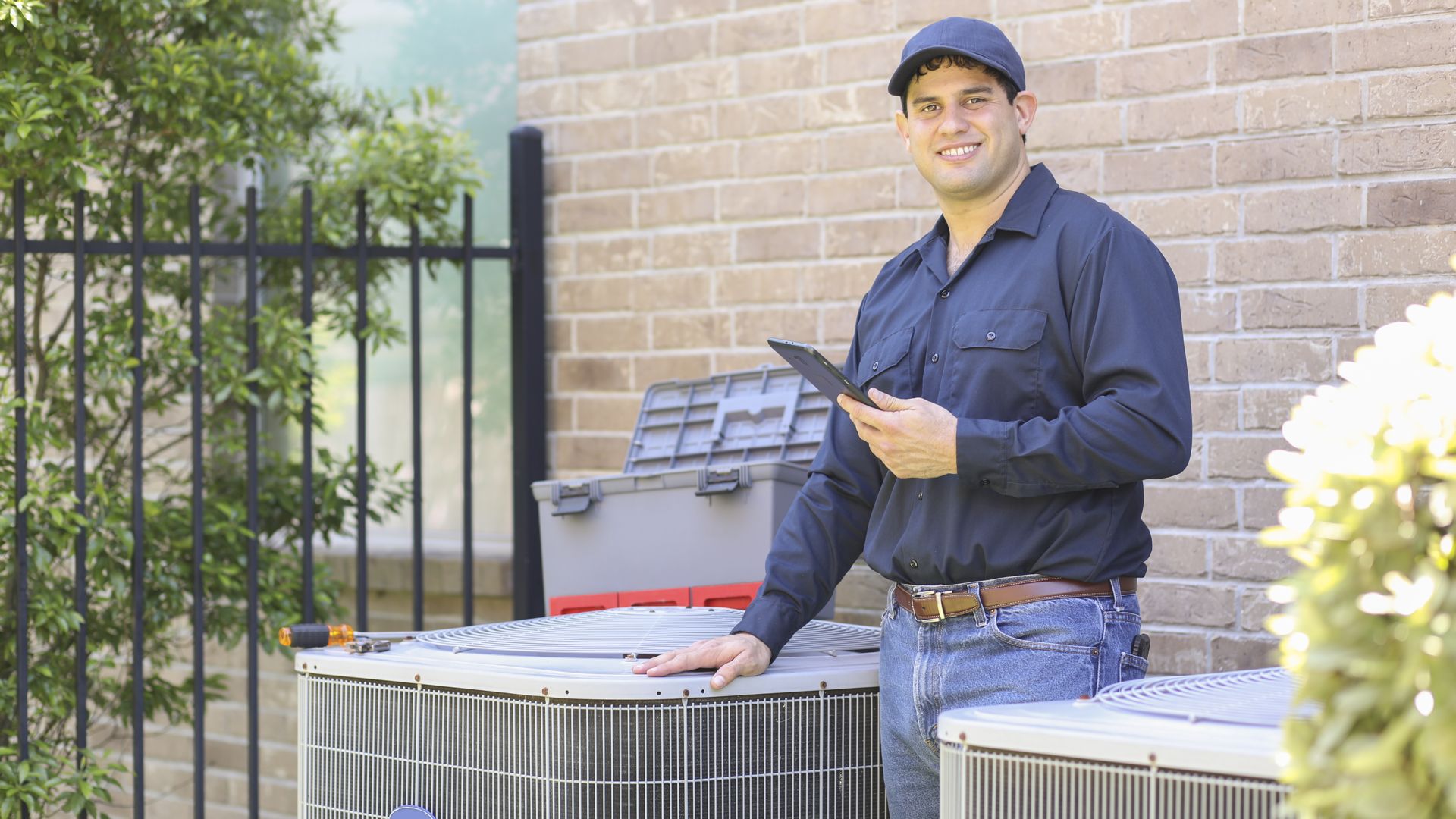
Summer energy bills have a way of climbing even when the AC unit is still doing its job. The system runs, the house cools eventually, and yet the electric meter keeps spinning faster than it used to. That gap between “technically working” and “working efficiently” is where most aging central air conditioners live, and it costs Sandusky homeowners real money every July and August.
We’ve been diagnosing that gap for a long time. Hohler Furnace & Sheet Metal has served Northwest Ohio since 1860 and has been family-owned continuously since 1929, which means we’ve seen what happens to HVAC equipment across decades of humid Lake Erie summers. If your unit is 10 to 20 years old and you’re not ready to replace it yet, there are practical steps that can close some of that efficiency loss before it becomes a repair crisis.
Why Older AC Units Lose Efficiency Over Time
Efficiency decline in an aging air conditioner isn’t just a matter of abstract wear and tear. There are specific mechanical reasons a 15-year-old unit struggles to keep up with a newer one.
Compressor performance degrades measurably after roughly 12 years of operation. The compressor pressurizes refrigerant so the system can move heat out of your home; as it weakens, the unit has to run longer to reach the same set temperature. A system originally rated at 10 SEER (Seasonal Energy Efficiency Ratio, the standard measure of cooling output per unit of electricity consumed) may be operating closer to 8 SEER after years of use. Compare that to the current minimum of 14 SEER for new residential central air conditioners in Ohio, a standard that took effect January 1, 2023, and the gap becomes significant.
Sandusky’s humid continental climate compounds the problem. With hot, humid summers and July highs typically in the upper 70s to low 80s°F, the air off Lake Erie carries substantial moisture load. An older unit isn’t just cooling the air; it’s simultaneously dehumidifying it. A declining system struggles with both tasks, which is why a home can feel clammy even when the thermostat reads the right number.
What Homeowners Can Do Between Service Calls
Several of the most effective efficiency measures cost nothing and take under ten minutes. These won’t restore a degraded compressor, but they remove the obstacles that force an already-stressed system to work even harder.
- Replace air filters every 30 to 90 days during cooling season. A clogged filter restricts airflow, forcing longer run cycles to move the same volume of air. A filter rated MERV 11 or 12 (on a scale of 1 to 16 measuring how effectively a filter traps particles) is a reasonable choice for most residential systems, though the right balance depends on your system’s airflow design.
- Clear the area around your outdoor condenser unit. Vegetation, grass clippings, and debris within two to three feet of the cabinet restrict airflow through the condenser coils, reducing heat rejection. It’s a five-minute task with a real efficiency payoff.
- Set the thermostat to 78°F when you’re home. According to the Department of Energy, turning your thermostat back 7 to 10 degrees for eight hours a day can save as much as 10 percent a year on heating and cooling costs. Raising the setpoint while the house is unoccupied is one of the simplest ways to cut cooling costs over a season.
What a Professional Tune-Up Does That DIY Can’t
There’s a meaningful line between what a homeowner can safely address and what requires a trained technician with the right tools. Filters and thermostat settings sit on one side. The systems that most directly determine how efficiently your unit runs sit on the other.
Coil Cleaning
Both the indoor evaporator coil and the outdoor condenser coil accumulate fouling over time. Dirt on the evaporator coil insulates it, reducing its ability to absorb heat from passing air. Fouled condenser coils can’t reject heat effectively to the outside. Department of Energy data suggests that a professional tune-up can reduce cooling costs by up to 30 percent. The evaporator coil in particular requires proper access and handling to avoid damaging the fins or refrigerant lines. Not a DIY job.
Refrigerant Inspection & R-22 Implications
Low refrigerant forces a system to run significantly longer to achieve the same cooling, and a leak won’t resolve itself. For older units, this issue carries an added complication. Any unit manufactured before 2010 likely uses R-22 refrigerant. The EPA banned R-22 production and import effective January 1, 2020, which means only recovered, recycled, or reclaimed supply remains on the market. That supply is finite and shrinking, and R-22 recharge costs climb steadily as a result. There’s also no conversion path to a newer refrigerant. Moving off R-22 requires replacement components or full system replacement. If your unit is 16 years old or older and needs a refrigerant recharge, that’s critical information for your repair-versus-replace decision.
Electrical & Drainage Checks
A professional tune-up also covers electrical connection integrity, capacitor condition, drain line clearance, and thermostat calibration. Each affects how reliably the system runs during peak summer heat. A failing capacitor, for example, can cause the compressor and fan motors to draw excess current before eventual failure, turning a minor service call into a major repair.
Efficiency Upgrades That Reduce the Load on an Older Unit
Some improvements don’t require touching the AC unit at all. By reducing the load the system carries, they can extend useful runtime and lower bills directly.
Programmable or Smart Thermostat
Most older central air systems are compatible with a programmable or smart thermostat. Automating setback temperatures when the house is empty removes a common source of unnecessary runtime without requiring any discipline from the occupants.
Duct Sealing
Leaky ductwork is one of the most underappreciated efficiency losses in older homes. Conditioned air escaping through gaps in supply ducts before it reaches living spaces forces the unit to run longer than its rated capacity would suggest. Duct sealing with mastic sealant or metal-backed tape (not standard duct tape, which degrades quickly) can recover meaningful efficiency at relatively low cost.
Ceiling Fan Direction
Ceiling fans running counterclockwise in summer create a wind-chill effect that makes occupants feel 2 to 4 degrees cooler without lowering the air temperature. Setting the thermostat those extra degrees higher reduces the system’s runtime without any reduction in perceived comfort.
Knowing When Repairs Still Make Sense
There’s a practical rule of thumb used widely in the HVAC industry: multiply the unit’s age in years by the cost of the repair being considered. If that number exceeds $5,000, replacement typically delivers better long-term value. A 14-year-old unit facing a $400 repair clears that threshold easily. The same unit facing a $600 compressor repair doesn’t.
Not every situation calls for replacement. A well-maintained 12-year-old unit with no refrigerant issues and clean coils may still have meaningful life remaining, and targeted repairs can restore real efficiency. The key is getting an honest assessment from someone who understands what the system actually needs, not just what it would cost to keep it running another season.
For Sandusky homeowners who want to know where their older unit stands, Hohler Furnace & Sheet Metal offers free estimates and same-day scheduling when available, with 24/7 emergency service if the system goes down during a heat stretch. As a Bryant Factory Authorized Dealer, our technicians are trained to current standards and can give you a clear picture of what’s worth repairing and what isn’t. Reach us at (419) 904-5605.